Key Takeaways:
- A watch winder is a device that rotates automatic watches to keep them wound when not being worn
- Watch winders are most beneficial for collectors with multiple automatic watches or timepieces with complex complications
- Quality winders offer adjustable turns per day (TPD) and rotation direction settings
- Single-watch owners or those with simple time-and-date models typically don't require a winder
- Proper winder settings prevent unnecessary wear while maintaining watch accuracy
- Watch winders double as attractive display cases for showcasing your collection
If you've recently joined the world of automatic watch collecting, you've probably stumbled across the term "watch winder" and wondered what all the fuss is about. Are they essential equipment or just another accessory trying to separate you from your hard-earned cash? We get asked this question constantly at Lux Watch Care, and the honest answer is: it depends entirely on your situation.
Let me walk you through everything you need to know about watch winders so you can make an informed decision for your collection.
Understanding Automatic Watches First
Before we dive into watch winders, let's quickly cover how automatic watches actually work. Unlike quartz watches that run on batteries, automatic (or self-winding) watches contain a tiny rotor that spins as you move your wrist throughout the day. This spinning motion winds the mainspring, which stores the energy needed to keep your watch ticking.
The clever bit is that this system means you never need to manually wind your watch (though you can) as long as you're wearing it regularly. However, when you take your automatic watch off and leave it sitting on your bedside table, that power reserve will eventually run out. Depending on the movement, this typically happens anywhere from 24 to 72 hours later, at which point your watch stops completely.
So What Exactly Is a Watch Winder?
A watch winder is essentially a motorised device that rotates your automatic watch when you're not wearing it, mimicking the natural movement of your wrist. By gently turning the watch at specific intervals, it keeps the rotor inside spinning and the mainspring wound, which means your watch continues running and maintains accurate time and date settings.
At Lux Watch Care, we offer premium watch winders in various configurations, from single-watch models perfect for that one special timepiece to multi-watch units designed for serious collectors. Think of it as a personal assistant for your watches, ensuring they're always ready to wear the moment you want them.
Modern watch winders aren't just simple rotating motors. Quality units (like the ones we stock) offer programmable features including:
Turns Per Day (TPD): Most automatic watches need between 500 and 800 turns daily, though requirements vary by manufacturer and movement. A proper winder lets you adjust this setting to match your specific watch's needs.
Rotation Direction: Some watches wind in one direction only (usually older pieces), while modern automatics typically wind bi-directionally. Your winder should accommodate your watch's specific requirements, whether that's clockwise, counterclockwise, or alternating.
Rest Periods: Rather than spinning continuously, good winders operate in cycles with built-in rest periods. This intermittent operation better simulates real-world wear patterns and helps prevent unnecessary strain on the automatic winding system.
Power Options: Winders can be battery-powered (useful if you keep watches in a safe) or AC-powered for home use.

How a Watch Winder Actually Works
The mechanics are straightforward. Your watch sits secured in a cushioned holder (we recommend checking that the fit is proper to avoid stress on your bracelet or spring bars), which is mounted on a rotating platform. A small motor turns this platform at preset intervals and speeds, causing the watch's internal rotor to spin and wind the mainspring, just as it would on your wrist.
For instance, a typical cycle might rotate the watch clockwise for two minutes, pause for six minutes, then rotate counterclockwise for two minutes. This pattern continues throughout the day to achieve the target TPD while giving the mechanism regular rest periods.
We always tell customers that the key to successful watch winding is matching the winder's settings to your specific watch's requirements. Using incorrect settings (too many rotations or the wrong direction) can potentially cause more harm than good.
When You Actually Need a Watch Winder
Here's where we get into the practical reality of watch ownership. Not everyone needs a winder, and that's perfectly fine.
You'll Definitely Benefit If:
You own a watch with complicated calendar functions like an annual calendar, perpetual calendar, or GMT with date complications. These are genuinely tedious to reset properly, sometimes requiring you to advance the hands through multiple 24-hour cycles just to get the date right. For these timepieces, a winder is less about luxury and more about sanity.
You rotate between several automatic watches regularly and want them all ready to wear at a moment's notice. If you're the type who chooses their watch based on mood or outfit, having your entire collection wound and accurate eliminates the morning ritual of setting each piece.
You travel frequently and want your watches maintained while you're away. A quality watch winder keeps everything ticking over whether you're home or halfway across the world.
You Probably Don't Need One If:
You own just one automatic watch that you wear daily. Your wrist is the best winder available, and there's absolutely no need for additional equipment.
Your collection consists mainly of simple time-and-date watches. These take less than a minute to set when you pick them up after a few days, so the convenience factor isn't compelling enough to justify the expense.
You actually enjoy the ritual of winding and setting your watches. Many collectors find this meditative, and there's genuine pleasure in that hands-on connection with your timepieces. Some enthusiasts deliberately let their watches run down between wears and make a ritual of winding the collection weekly.
The Great Debate: Will a Winder Harm Your Watch?
This question sparks endless debate in watch forums, and we've heard every opinion imaginable. The truth, as usual, sits somewhere in the middle.
The concern is that keeping a watch running continuously on a winder means more wear on the movement compared to letting it rest. More motion theoretically equals more friction on pivots, jewels, and other moving parts, which could mean you'll need servicing sooner.
However, here's the counterpoint: automatic watches are specifically designed to run 24/7. That's their intended use case. The idea that running a watch causes "unnecessary" wear isn't quite accurate when the watch was engineered for continuous operation. What matters more is using appropriate winder settings (correct TPD, proper direction, intermittent cycles with rest periods) rather than cheap winders that spin continuously at incorrect speeds.
The myth about watch oils congealing if left dormant has been thoroughly debunked with modern synthetic lubricants. These don't gum up like the animal-based oils of decades past. While oils will eventually dissipate over time regardless of whether the watch runs, a lack of motion won't cause your watch to seize up or get damaged.
That said, if you're using a winder incorrectly (wrong settings, too many rotations, continuous spinning without rest), you could potentially accelerate wear. This is why we emphasise choosing quality equipment and programming it correctly for each watch in your collection.
Choosing the Right Watch Winder
If you've decided a winder makes sense for your situation, here's what to look for:
Motor Quality: Ultra-quiet Japanese or Swiss motors are worth the investment. The last thing you want is a winder that sounds like a tumble dryer when you're trying to sleep.
Build and Materials: Look for solid construction with quality materials. Cheap winders with flimsy plastic components often fail quickly or cause vibration issues. Our watch winder collection focuses on units built to last, with proper dampening and stable gearing.
Adjustability: Essential features include variable TPD settings (at minimum between 600-1000 TPD) and the ability to select rotation direction. Without these, you're just guessing at what your watch needs.
Cushion and Fit: The watch holder should accommodate various case sizes and strap widths securely without putting stress on the bracelet or case. Adjustable cushions are ideal for collectors with different-sized watches.
Capacity: Consider your current collection and potential future growth. A 2-slot watch winder might be perfect now, but if you're actively collecting, you might appreciate the flexibility of a larger unit.
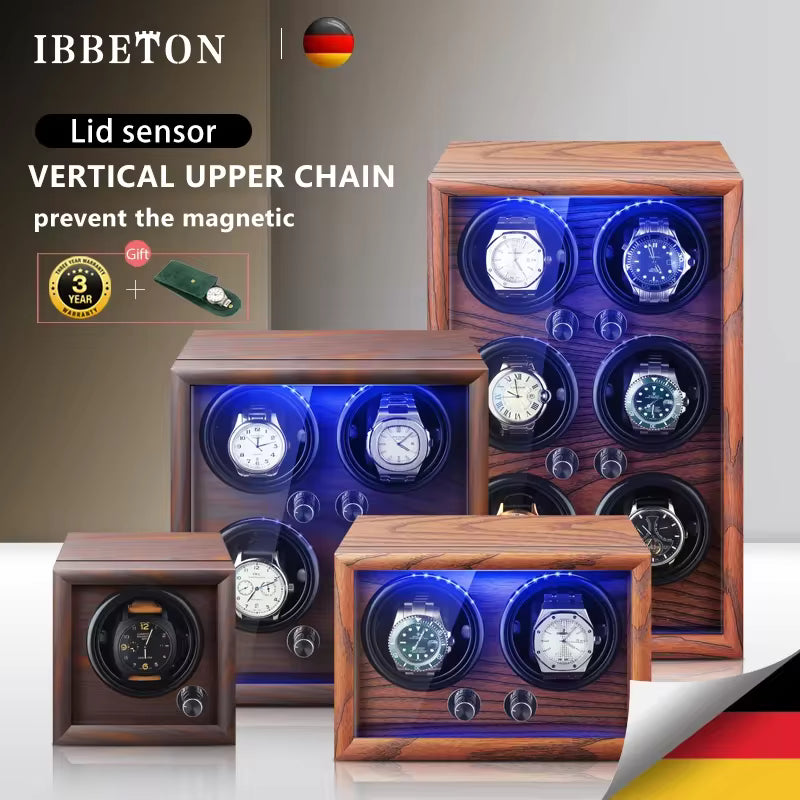
We stock everything from single watch winders perfect for that one special piece to multi-watch display units that showcase your entire collection beautifully while keeping everything wound.
Alternatives to Consider
Before committing to a winder, consider whether other storage solutions might better suit your needs. A quality watch box provides secure storage and attractive display without the mechanical complexity. These are excellent for manual-wind watches, quartz pieces, or automatic watches you don't mind setting when you wear them.
For travellers, a watch roll offers portable protection without the bulk or power requirements of a winder. Many of our customers use watch rolls for travel and winders at home, which provides flexibility for different situations.
If you're specifically concerned about watches with complications, you might explore whether your watchmaker offers setting services. Some collectors prefer to have their perpetual calendars professionally set once or twice yearly rather than running them continuously.
Practical Tips for Using Watch Winders
If you've got a winder (or you're getting one), here are some practical insights we've learned:
Initial Winding: Always give your watch about 20-30 manual winds via the crown before placing it on a winder. This provides an initial power reserve and ensures the mechanism starts smoothly rather than relying entirely on the winder to build power from zero.
Monitor Performance: Pay attention to your watch's timekeeping over the first few weeks on a winder. If accuracy deteriorates or the watch seems to struggle, your TPD settings might need adjustment.
Rest Your Watches: Even with a winder, it's wise to give watches occasional breaks. Some collectors rotate which pieces stay on winders, allowing others to rest for a few weeks at a time.
Location Matters: Place your winder somewhere stable, away from direct sunlight and extreme temperature fluctuations. We've written more about optimal watch storage conditions if you want to dive deeper.
Keep It Clean: Dust and debris can interfere with winder motors. Periodic cleaning (following manufacturer guidelines) keeps everything running smoothly.
The Bottom Line
So, do you really need a watch winder? For most single-watch owners or those with simple automatics, the answer is probably no. It's a luxury rather than a necessity. Your watch will be perfectly fine resting between wears, and a minute spent setting it is hardly a burden.
However, if you're building a collection, if you own watches with complex complications, or if you simply value the convenience of grab-and-go timepieces, a quality winder can absolutely enhance your ownership experience. It's not about the watch needing to run continuously; it's about whether the convenience and ready availability of your collection matters to you personally.
At Lux Watch Care, we're passionate about helping Australian watch enthusiasts properly care for their collections. Whether that means investing in a premium watch winder, finding the perfect watch case for secure storage, or simply learning about proper watch maintenance, we're here to help you make informed decisions based on your actual needs rather than marketing hype.
The watch collecting community has strong opinions on both sides of the winder debate, and that's fine. What matters is understanding your own priorities and choosing accessories that genuinely serve your collection. There's no single right answer, just the answer that works best for you.
Ready to explore storage solutions for your collection? Whether you're looking for winders, cases, or travel accessories, we'd love to help you find exactly what you need. Visit our contact page to get in touch with our team, and we'll answer any questions about finding the perfect solution for your watches.
Frequently Asked Questions
Can a watch winder damage an automatic watch?
When used with correct settings (appropriate TPD, proper rotation direction, and intermittent cycles), a quality watch winder should not damage your automatic watch. Automatic movements are designed for continuous operation. Problems typically arise from cheap winders with incorrect settings, excessive rotations, or continuous spinning without rest periods. Always match the winder's specifications to your watch manufacturer's recommendations.
How many turns per day does my automatic watch need?
Most automatic watches require between 500-800 turns per day, though this varies significantly by manufacturer and movement. Check your watch's documentation or the manufacturer's website for specific guidance. Popular brands like Rolex typically recommend around 650-800 TPD bidirectional, while some movements require uni-directional winding. When in doubt, start conservative and monitor your watch's performance.
Is it better to let an automatic watch stop or keep it running?
It's perfectly safe to let an automatic watch stop completely between wears. Modern synthetic watch oils don't coagulate from lack of motion, and the watch won't suffer damage from sitting idle. The main inconvenience is needing to reset the time, date, and any complications when you next wear it. For simple watches, this takes seconds; for complicated pieces like perpetual calendars, it can be tedious. Choose based on convenience rather than watch health concerns.
Do I need a watch winder for my Rolex?
Most Rolex models (time-only or time-and-date pieces with quick-set functions) don't require a winder unless you simply want the convenience. Models like the Submariner, Datejust, or Oyster Perpetual are quick to set after stopping. However, complications like the Day-Date or Sky-Dweller benefit more from winders due to their additional functions. If you wear your Rolex regularly, your wrist provides all the winding it needs.
Can you put a manual wind watch on a watch winder?
No, watch winders don't work for manual-wind watches. The winding mechanism in manual watches requires direct crown manipulation to tension the mainspring; simply rotating the watch accomplishes nothing. Manual-wind watches need to be wound by hand via the crown. Similarly, quartz watches don't benefit from winders since they run on battery power.
How long does an automatic watch run without wearing it?
Power reserve varies by movement, typically ranging from 38-48 hours for most automatic watches, though some modern movements offer 60-80 hours or even longer. When you take your automatic watch off, it will continue running on stored power for this duration before stopping. The exact time depends on the movement's efficiency and how fully wound it was when removed from your wrist.
Are expensive watch winders worth it compared to budget options?
Quality matters significantly with watch winders. Expensive models typically feature superior motors (quieter, more reliable), better construction (less vibration, longer lifespan), precise rotation control, and proper programming options. Budget winders often use noisy motors, lack adjustable settings, or fail quickly. For protecting valuable watches, investing in a reliable winder from a reputable manufacturer provides peace of mind and better long-term value. Consider it proportionate to your watch collection's value.