
Key Takeaways
- Leather watch rolls are well suited to short-term and medium-term storage, and can work for longer-term storage under the right conditions.
- The quality of the leather, the interior lining material, and the construction of the roll all affect whether it is appropriate for extended storage.
- High-humidity environments can cause leather to retain moisture, which may affect the watch stored inside - storage environment matters significantly.
- Interior lining materials should be soft, non-abrasive, and ideally non-reactive to watch case metals and crystal coatings.
- For genuinely long-term storage of months or years, a structured watch box with a controlled interior environment is often the more considered choice.
- A leather watch roll remains one of the most practical and protective day-to-day and travel storage solutions available for most collectors.
- The condition and maintenance of the leather roll itself affects how well it protects what is stored inside it.
The leather watch roll has become one of the most popular storage accessories among watch collectors, and with good reason. It is compact, portable, visually appealing, and offers individual cushioned protection for each piece stored inside. For travel use and everyday rotation, it is genuinely hard to fault.
But a question that comes up with some regularity is whether a leather watch roll is appropriate for longer-term storage - for a watch that will sit inside it for weeks, months, or longer without being worn. The answer is nuanced, and it depends on several factors that are worth understanding before making a decision for your collection.
At Lux Watch Care, we stock a range of leather watch rolls and storage solutions for Australian collectors, and we are often asked about the suitability of different products for different storage scenarios. This post works through the key considerations honestly so you can make an informed choice for your specific situation.
What a Watch Roll Is Actually Designed For
It helps to start with what a leather watch roll is primarily designed to do. At its core, it is a portable, flexible storage solution that keeps watches individually separated, cushioned against impact, and protected from dust and surface scratches during transport and short-term storage.
The design trades some features of a rigid watch box - structural protection from significant impact, a completely sealed interior environment, and a stable base for display - in exchange for flexibility, compactness, and packability. This trade-off makes perfect sense for the use cases the roll is primarily designed for: travel, keeping a small rotation of watches accessible, and moving watches between locations.

For these purposes, a quality leather watch roll performs well. The question becomes more interesting when we ask whether it also works adequately for watches stored for longer periods without being worn or moved.
The Core Concern With Long-Term Storage
When a watch sits in storage for an extended period, the main risks are humidity, dust infiltration, chemical off-gassing from surrounding materials, and physical pressure on the case or crystal from the storage environment itself.
A leather watch roll addresses some of these more naturally than others.
Dust protection is generally good in a rolled or zipped leather case - the exterior is largely sealed when closed, and the interior lining wraps around the watch. Physical pressure from the cushioned slots is minimal when the watch is correctly sized for the compartment. These are positives.
The humidity question is more complex. Leather is a natural material that responds to its environment. In a high-humidity setting - which is relevant across many parts of Australia, particularly in coastal and tropical regions - leather can absorb moisture from the surrounding air. If the roll is stored in a humid environment and the leather is retaining some of that moisture, the interior may become slightly more humid than ideal for a watch stored inside over a long period. This is unlikely to cause harm over weeks, but it is a consideration worth taking seriously for storage measured in months.
In lower humidity, controlled environments - an air-conditioned room maintained at relatively stable temperature and humidity - this concern reduces considerably. The storage environment itself is often the deciding factor rather than the roll in isolation.
Interior Lining: What to Look For
The material that lines the interior of a watch roll - the surface that actually contacts the watch - matters more than most people initially consider. For long-term storage, you want a lining that is soft enough not to scratch case surfaces or crystals, stable enough not to degrade and leave residue, and ideally neutral in terms of chemical reactivity.
Microfibre and suede-like synthetic linings are common in quality watch rolls and generally perform well. They are soft, non-abrasive, and do not tend to react with watch case materials or crystal coatings under normal conditions.
Materials to be more cautious about include low-quality foam that can degrade over time and leave residue on surfaces it contacts. If a watch roll has an interior that smells strongly of chemicals when new, that is worth noting - it may suggest a lining that continues to off-gas over time, which is not ideal for anything stored inside long term.
A quality lining that has been properly finished and does not carry chemical odours is a reasonable signal that the materials used are stable enough for extended storage. Our vintage genuine leather watch roll cases use interior linings specifically chosen for their softness and stability, which is part of what distinguishes a considered storage product from a purely aesthetic one.
The Leather Quality Question
Not all leather watch rolls are created equal, and the quality of the leather itself affects long-term suitability. Full-grain and top-grain leathers are more stable, more resistant to moisture fluctuations, and more durable over time than split leather or bonded leather alternatives. They also tend to age more consistently, maintaining their structure rather than cracking or peeling.
Cowhide leather, including the crazy horse and saffiano variants commonly used in quality watch accessories, offers a reasonable combination of durability and stability. Saffiano leather in particular - which has a cross-hatch texture pressed into the surface and often a resin treatment applied - tends to be more resistant to moisture than untreated full-grain leather, which can be an advantage in humid environments.
The finish of the leather also matters. A leather that has been properly conditioned and treated before sale is more stable in varying conditions than one left in a raw or minimally treated state. Quality watch rolls from reputable suppliers will have passed through appropriate finishing processes before reaching the consumer.
For watches stored in the medium term - a few weeks to a few months - a quality leather roll in good condition is entirely appropriate. For longer storage, ensuring the roll is stored in a controlled environment is the most important additional step you can take.
When a Watch Box Is the Better Choice
For storage that extends into many months or longer, particularly for higher-value pieces or in environments where temperature and humidity are difficult to control, a quality structured watch box is generally the more appropriate solution.
A watch box with a rigid outer structure provides better protection against physical impact, maintains a more stable interior environment, and in some cases offers foam or fabric inserts that create more separation between the stored pieces and the external environment. For a watch that will sit unworn for six months or more, that additional stability is worthwhile.
This does not mean a leather watch roll is inadequate for all long-term scenarios - rather, it means the decision should be made with awareness of the relevant variables. A quality roll stored in a stable, climate-controlled environment is meaningfully different from the same roll stored in a garden shed through an Australian summer.
At Lux Watch Care, we stock both leather watch rolls for flexible and travel storage and a range of structured watch boxes suited to longer-term home storage. Many collectors use both - rolls for active rotation and travel, boxes for pieces in longer storage. This combination approach is one of the most practical ways to match the storage solution to the actual storage scenario.
Humidity and Australian Conditions
It is worth acknowledging that Australia's climate varies considerably. Sydney, Brisbane, and Darwin experience significantly higher average humidity than Adelaide or Melbourne, and coastal regions generally differ from inland areas. These differences affect the practical considerations around leather storage in ways that a one-size answer cannot fully address.
If you are in a high-humidity region, keeping leather goods in an air-conditioned environment, ensuring the roll is not stored in a wardrobe or enclosed space that traps warm moist air, and periodically checking on stored watches during extended periods is sensible practice. A small silica gel desiccant packet placed near (not inside) the storage area can help manage ambient humidity in enclosed spaces.
If you are in a lower-humidity region with a stable climate, the concerns around leather storage are considerably reduced, and a quality watch roll can serve adequately for longer storage periods with minimal additional consideration.
Our guide on how to store your watches properly for the long term goes into the broader environmental factors affecting watch storage and is a useful companion read to this post.
Caring for the Watch Roll Itself
A leather watch roll that is well maintained provides better long-term protection than one that is neglected. Leather that has dried out and begun to crack is not only less attractive - it is also less structurally sound and may allow more environmental ingress than a supple, conditioned roll.
Periodically conditioning the exterior leather with an appropriate leather conditioner keeps the material supple, helps maintain its moisture resistance, and extends the useful life of the roll considerably. This is a simple maintenance task that takes only a few minutes and makes a genuine difference to the roll's long-term performance.
Avoid storing the roll in direct sunlight for extended periods - UV exposure degrades leather over time and can cause fading and drying. Keep it away from heat sources, which have a similar drying effect. Our post on keeping your leather watch accessories in good condition over time outlines a practical maintenance approach for collectors who want their storage accessories to last.
Choosing the Right Roll for Your Storage Needs
If you have decided that a leather watch roll is the right choice for your storage needs - whether for travel, active rotation, or medium-term storage - the specific product matters. At Lux Watch Care, our range includes options across different slot counts and leather types to match different collecting habits.
For an individual piece stored solo, the genuine leather single slot watch roll organiser provides focused, compact protection in a quality leather exterior. For collectors rotating two or three pieces, the 2-3-4-6-8 slots saffiano genuine leather watch roll box offers the moisture-resistant properties of saffiano leather in a versatile multi-slot format. For a more generous capacity with a premium finish, the luxury genuine leather 6 slot watch roll case suits collectors managing a larger active rotation.
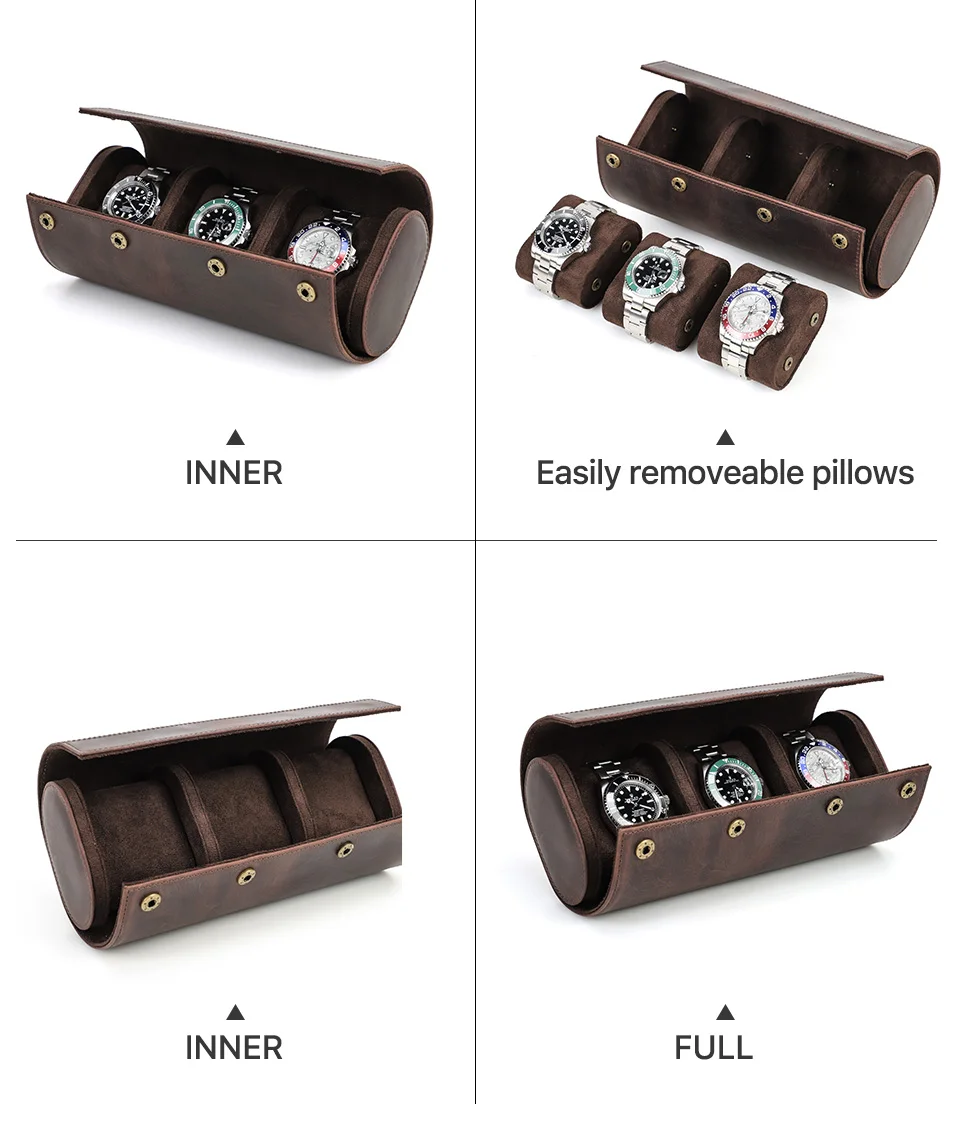
Choosing the right slot count matters for storage quality. A watch in an oversized slot that allows movement will experience more contact with the lining than one that fits the slot correctly. A snug but not tight fit keeps the watch positioned consistently and reduces unnecessary contact.
Our detailed overview of how to select the right storage format for your collection compares the watch roll and watch case formats directly and may be helpful if you are still deciding which direction suits your collection best.
The Honest Answer
A quality leather watch roll, stored in an appropriate environment and maintained in good condition, is a safe and suitable storage solution for short to medium-term use. For most day-to-day and travel storage purposes, it is an excellent choice - compact, protective, and visually considered.
For genuinely extended storage of months or more, particularly in variable or humid environments, the more cautious and recommended choice is a structured watch box that provides a more stable interior environment. Using both in combination - a roll for active pieces, a box for watches in longer-term storage - gives your collection appropriate protection across different scenarios.
At Lux Watch Care, we are glad to help you find the right solution for your specific situation.
Reach out to the Lux Watch Care team here and we will help you find storage that fits your collection properly.
Frequently Asked Questions
Can I store my watch in a leather roll for several months?
Yes, in most cases a quality leather watch roll is adequate for storage of several months, provided it is kept in a stable, climate-controlled environment with moderate humidity. In high-humidity conditions or less controlled environments, a rigid watch box may be a more conservative choice for extended storage. The quality of the roll's interior lining and the leather itself also affects suitability.
Does leather off-gas and affect watch finishes?
Well-finished, quality leather is generally stable and does not produce significant chemical off-gassing under normal conditions. Lower-quality or poorly treated leather products may carry chemical odours that can persist over time. If a leather roll has a strong chemical smell when new, allowing it to air out before placing watches inside is sensible. Quality leather rolls from reputable suppliers are finished to standards that make this a minimal concern in practice.
What should the interior lining of a watch roll be made from?
Soft, non-abrasive materials such as microfibre or suede-like synthetic fabrics are well suited to watch storage. They are gentle on case surfaces and crystal coatings, stable over time, and do not tend to react with watch materials. Avoid rolls with interior linings that feel rough or leave fibres, and be cautious of foam linings that show any signs of degradation in older rolls.
Is a leather watch roll or a watch box better for long-term storage?
For long-term storage measured in many months or longer, a structured watch box is generally the more appropriate choice. It provides a more stable interior environment, better protection from significant impact, and typically a more controlled storage space for pieces not in active rotation. Leather watch rolls are better suited to active use, travel, and short to medium-term storage.
Does humidity affect leather watch rolls?
Yes. Leather responds to its environment, and in high-humidity conditions leather can absorb moisture from the surrounding air, which may slightly increase the humidity inside the roll. In consistently humid climates - relevant across many parts of coastal and tropical Australia - storing leather goods in an air-conditioned, climate-controlled environment reduces this effect considerably. A silica gel desiccant placed nearby can also help manage ambient moisture in enclosed storage spaces.
How do I maintain a leather watch roll?
Periodic conditioning of the exterior leather with a quality leather conditioner keeps the material supple and helps maintain its structural integrity over time. Avoid storing the roll in direct sunlight or near heat sources, as both degrade leather through drying and UV exposure. Keep the interior lining clean by gently wiping it down if needed, and ensure the roll is fully dry before closing it if it has been exposed to any moisture.
Can I store multiple watches in one roll safely?
Yes, provided each watch occupies its own individual slot and fits the slot correctly without excessive movement. Watches that are loose in oversized slots may move during transport and come into contact with the lining more than necessary. Watches stored in correctly sized slots, individually cushioned and separated from each other, are well protected in a quality multi-slot roll.