
Key Takeaways
- A structured watch box system helps reduce avoidable damage and improves accessibility
- Organising by usage, type, or value makes daily rotation easier
- Choosing the right size box early avoids frequent upgrades
- Proper spacing and cushioning protect watches from wear
- Combining storage solutions supports long-term collection growth
As your watch collection grows, organisation becomes more than just a visual preference. It becomes essential for protection, accessibility, and long-term care.
Many collectors start with a simple setup, only to realise later that their storage system no longer fits their needs. Watches begin to compete for space, and the risk of scratches, pressure, and misplacement increases.
At Lux Watch Care, we help collectors move from basic storage to structured organisation. In this guide, we break down practical watch box organisation tips that scale with your collection.

Why Organisation Matters More as Your Collection Grows
A single watch is easy to manage. A collection introduces complexity.
Without proper organisation, you may encounter:
- Watches rubbing against each other
- Difficulty locating specific pieces
- Inconsistent rotation and usage
- Increased handling, leading to wear
A well-organised watch box does more than store. It creates a system that supports how you use and maintain your watches.
Start with the Right Watch Box Size
One of the most common mistakes is choosing a box that only fits your current collection.
If you are planning to expand, it is more practical to size up early.
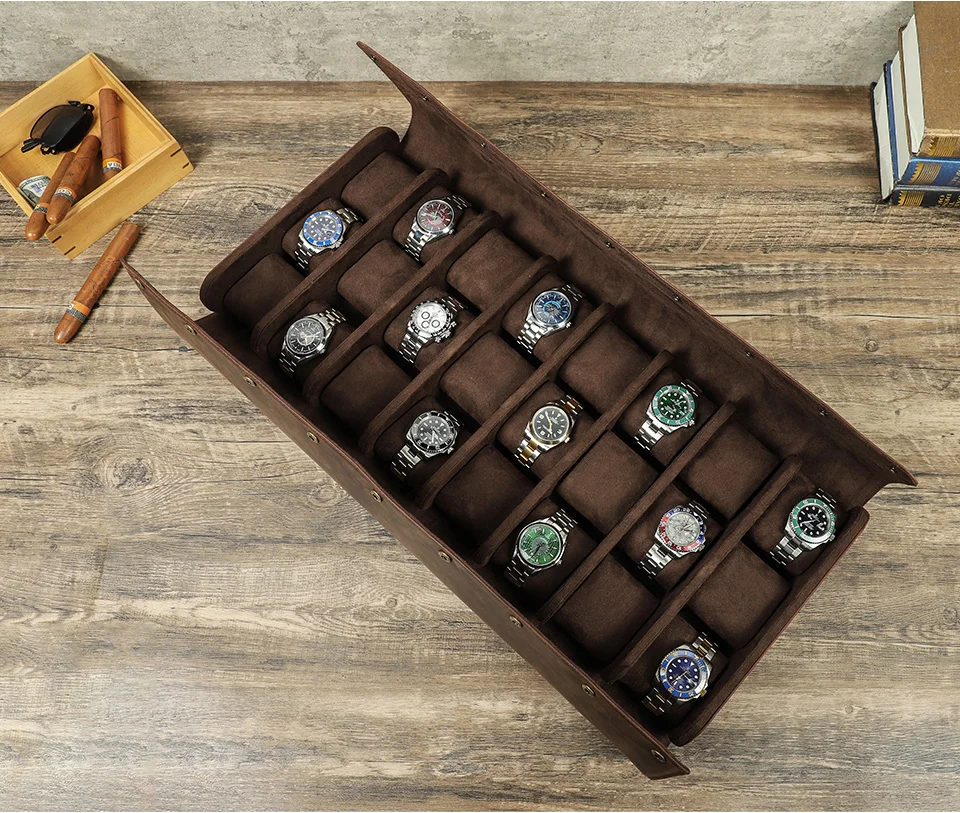
For example, a larger option like the vintage cowhide leather 12 slot watch box provides room to grow without overcrowding.
For mid-sized collections, the genuine leather 8 slot watch storage box offers a balance between compact design and flexibility.
You can explore additional layouts in our watch box collection , designed for collectors at different stages.
Organise by Usage Frequency
One of the most effective ways to organise your watch box is by how often you wear each piece.
Daily Watches
Place frequently worn watches in the most accessible positions.
Occasional Watches
Keep these slightly further back but still easy to reach.
Rarely Worn or Special Pieces
Store these in more protected sections where they are less likely to be handled frequently.
This approach reduces unnecessary movement and keeps your routine efficient.
Group by Watch Type or Style
Another practical method is grouping watches by category.
You might organise by:
- Dress watches
- Sports or tool watches
- Vintage pieces
- Everyday wear
This structure makes it easier to choose the right watch quickly and maintain consistency in how they are stored.
If you are unsure how different storage methods compare, our guide on choosing between watch winders and storage boxes provides useful insights.
Use One Slot Per Watch Only
It may seem obvious, but overcrowding is one of the most common issues in growing collections.
Each watch should have:
- Its own dedicated slot
- Adequate spacing from neighbouring watches
- Proper cushioning to maintain its shape
Doubling up in a single slot increases the risk of scratches and pressure damage.
Maintain Proper Cushion Fit
A watch box is only as effective as its internal support.
If the cushion is too loose:
- The watch may shift during movement
If it is too tight:
- It may place stress on the strap or bracelet
Ensuring a proper fit keeps each watch stable and reduces wear over time.
Separate Travel Storage from Home Storage
As your collection grows, it becomes important to separate how you store watches at home versus when travelling.
At home:
- Use structured watch boxes for organisation
During travel:
- Use compact options like watch rolls or cases
If you frequently move your watches, our guide on packing watches safely for travel explains how to avoid common mistakes.
Rotate Your Watches Regularly
Organisation is not just about placement. It also involves how you use your collection.
Regular rotation:
- Prevents long periods of inactivity
- Helps maintain movement in mechanical watches
- Keeps your collection actively enjoyed
For automatic watches, pairing storage with a winder can help maintain functionality. You can explore suitable options in our automatic watch winder range .
Avoid Mixing Accessories in the Same Box
It may be tempting to store straps, tools, or jewellery alongside your watches, but this can lead to unnecessary contact and damage.
Instead:
- Keep watches in dedicated compartments
- Store accessories separately
This preserves both the condition and organisation of your collection.
Keep Your Watch Box Clean and Consistent
Over time, dust and debris can accumulate inside your storage.
A simple routine helps:
- Wipe down the interior occasionally
- Check cushions and compartments
- Ensure watches are placed correctly after use
Consistency in how you store your watches is just as important as the box itself.
Expand Your System as Your Collection Grows
Eventually, a single watch box may no longer be enough.
Rather than overcrowding:
- Add a second box
- Use specialised storage for certain types
- Separate daily wear from long-term storage
Our article on organising your watch box effectively explores additional strategies for scaling your setup.
At Lux Watch Care, Organisation Meets Craftsmanship
At Lux Watch Care, we design storage solutions with real collectors in mind.
As highlighted in our approach , we believe that every watch deserves proper care, structured storage, and thoughtful presentation.
Our products are built to:
- Protect your collection
- Simplify organisation
- Enhance how you experience your watches daily
Because a well-organised collection is not just easier to manage. It reflects the value you place on each piece.
Build a System That Grows With You
Watch collecting is rarely static. Your storage should not be either.
By choosing the right watch box, organising it intentionally, and maintaining consistent habits, you create a system that evolves alongside your collection.
Small improvements in organisation can make a significant difference over time.
Need Help Choosing the Right Watch Storage?
If you are planning your next upgrade or refining your current setup, we are here to help.
Frequently Asked Questions
How should I organise my watch box for a growing collection?
Start by grouping watches based on usage or type, ensure each watch has its own slot, and choose a box with extra capacity to accommodate future additions.
What size watch box should I choose?
It is generally better to choose a slightly larger box than you currently need. This prevents overcrowding and allows your collection to expand without immediate upgrades.
Can I store multiple watches in one slot?
It is not recommended. Storing multiple watches in one slot increases the risk of scratches and pressure damage.
How often should I reorganise my watch box?
Reorganisation depends on how often your collection changes. Regular checks help maintain order and ensure each watch is stored correctly.
Should I separate daily and occasional watches?
Yes, separating watches based on usage improves accessibility and reduces unnecessary handling of less frequently worn pieces.
Do I need different storage for travel?
Yes, travel storage should be compact and protective, such as watch rolls or cases, while home storage focuses on organisation and display.
What is the biggest mistake in watch box organisation?
The most common mistake is overcrowding. Lack of space leads to contact between watches, which can cause gradual damage over time.