
There is a meaningful difference between the kind of storage that protects a watch for a few weeks between wears and the kind that is appropriate when a timepiece will be sitting untouched for months or potentially years. Most collectors think about the first type consistently. The second type gets less attention, and that is where the more significant and avoidable damage tends to accumulate.
The question of whether a watch box suits long-term storage does not have a single clean yes or no answer. It depends on the quality of the box, the environment it sits in, what type of watches are being stored, and whether a few basic maintenance habits are maintained across the storage period. At Lux Watch Care, we work with collectors who think seriously about their pieces - including the ones sitting in storage - and here is an honest breakdown of what the question actually involves.
What "Long-Term Storage" Actually Means for a Watch
Before getting into the specifics of watch boxes, it helps to be precise about what distinguishes long-term storage from regular storage.
A watch that sits in a box for two or three weeks between wears is in regular storage. The conditions during that period matter, but the watch is not exposed to the kinds of cumulative risks that develop over months and years. Long-term storage - for the purposes of this discussion - means a watch that will sit unworn for at least several months, potentially a year or more, and possibly indefinitely. This category includes heirloom pieces held for a future generation, collector pieces acquired but not currently in rotation, or watches set aside while the owner is travelling or relocating.
The risks that become relevant in this context are meaningfully different from the short-term ones. Lubricant behaviour in an unworn automatic movement, battery degradation in a quartz, gasket stiffening over extended time without use, environmental accumulation effects that multiply over months rather than days - these are the considerations that determine whether a watch emerges from long-term storage in the same condition it entered, or whether it needs significant work before it can be worn again.
What a Good Watch Box Does Well for Long-Term Storage
A quality watch box with a firm-fitting lid, individually cushioned compartments, and high-grade interior lining materials handles the core physical protection requirements for long-term storage effectively.
The lid limits the rate at which dust accumulates on and around the watches. Over a period of months, a watch left on an open surface will develop visible surface dust and accumulation around the crown threads - the lid of a closed box prevents most of this. Individual slots prevent watches from contacting each other, eliminating the case-on-case and bracelet-on-crystal abrasion that occurs when multiple pieces share an undivided space. The soft lining materials cushion each watch at its rest points, preventing micro-abrasion from hard contact surfaces over extended periods.
For collectors in Australia's more temperate regions, a quality leather or wood watch box in a stable, climate-controlled interior room provides a suitable long-term storage environment without requiring any additional modifications. The natural materials in a quality leather or wood box have some capacity to buffer minor humidity fluctuations, providing a slightly more stable microenvironment than a plastic container of equivalent size.
The Limitations That Matter for Extended Storage
Where standard watch boxes fall short for long-term storage is primarily in three areas: environmental isolation, cushioning material quality, and the particular requirements of automatic movements.
On environmental isolation, a standard watch box - even a well-constructed one - is not airtight. Air exchanges slowly through the lid joint and, to a lesser degree, through the materials themselves. Over months, the interior conditions of the box will gradually reflect the conditions of the room it sits in. This is manageable in a stable, climate-controlled environment. It becomes a problem in rooms that experience regular humidity spikes, significant temperature swings, or prolonged exposure to conditions outside the appropriate storage range. A box stored in a spare bedroom that is not regularly air-conditioned during Australian summer will not protect the watches inside from the elevated temperatures and humidity that room experiences.
On cushioning materials, this is where box quality becomes particularly relevant for long-term storage. Some lower-quality foam-based cushioning can off-gas over time - releasing volatile organic compounds that can react with rubber straps, synthetic bezels, and certain case finishes over extended periods. Watch forum discussions have documented cases where cheaper foam inserts have contributed to accelerated resin and rubber degradation in pieces stored for multiple years. This risk is substantially reduced with quality velvet or microfibre lining that does not have the same off-gassing profile. The quality of the cushioning material is a more significant consideration for long-term storage than it is for pieces being accessed and aired regularly.
On automatic movements, an automatic watch that sits without being wound will eventually run down, which is normal. The long-term concern is that the lubricating oils inside a stationary movement will begin to settle and, over extended periods without circulation, may dry or thicken at the contact points they were applied to protect. Modern synthetic watch lubricants are considerably more stable than the natural oils used in earlier decades, but they are not permanent, and extended static storage does allow some settling and gradual degradation of their distribution through the movement.
For watches in long-term storage, the practical response is periodic winding and running - taking the piece out every two to three months, winding it to full power reserve, and allowing it to run for a few hours before returning it to storage. This redistributes the oils and prevents extended settling at any single contact point. For collectors who cannot maintain this schedule reliably across an extended storage period, a watch winder for the automatic pieces provides an automated version of the same function.
Preparing a Watch Properly Before Long-Term Storage
The condition a watch goes into storage in largely determines the condition it comes out in. A few preparation steps meaningfully reduce the risk of finding problems when the piece is eventually retrieved.
For any watch that is going into long-term storage, having it professionally serviced beforehand is worth serious consideration if it is approaching its service interval or has not been serviced within the last five to seven years. A watch entering long-term storage with well-maintained lubricants and freshly inspected gaskets is in a fundamentally better position than one going in with aged or contaminated oils. Servicing is not always practical before storing a piece, but for valuable timepieces it is a genuinely protective step.
For quartz watches specifically, the battery should be removed before long-term storage. A depleted or degrading battery left inside a quartz movement can leak, and battery leakage causes damage to the movement and dial that is often irreversible. Removing the battery eliminates this risk entirely. The watch will need a fresh battery and resetting when it comes out of storage, but that is a minor inconvenience compared to movement damage from a leaked cell.
For all pieces, a thorough cleaning before storage prevents the accelerated degradation that comes from skin oils, salt from perspiration, and surface contaminants being sealed in contact with case, crystal, and strap materials for an extended period. Wiping the case and crystal with a microfibre cloth, and ensuring leather straps are clean and conditioned before storage, removes the surface chemistry that would otherwise interact with the case finish and lining materials across months of contact.
Room Conditions and Placement: The Variable That Matters Most
For long-term storage, the environment the box sits in matters more than it does for daily or weekly storage cycles, because the cumulative exposure effects of an unfavourable environment multiply across months and years.
The conditions watchmakers and horological organisations generally recommend for watch storage are a stable temperature of roughly 15 to 20 degrees Celsius and a relative humidity of 40 to 50 percent. These conditions keep lubricants at appropriate viscosity, prevent condensation from forming inside the case, and avoid the extremes of dryness that cause leather straps and rubber gaskets to harden and crack prematurely.
In practical terms, this means an interior bedroom or study in an air-conditioned home, away from exterior walls where temperatures fluctuate, away from bathrooms and kitchen areas where humidity spikes regularly, and away from windows where direct sunlight can reach the box. A wardrobe shelf or interior dresser in a regularly occupied and climate-controlled room is an appropriate long-term storage environment for most Australian households.
For collectors in coastal or tropical regions where ambient humidity is persistently elevated, adding silica gel packets inside the box provides an additional buffer. These need to be checked and refreshed periodically to remain effective - indicating packets that change colour when saturated are the practical choice for this application.
The Right Watch Box for Long-Term Storage
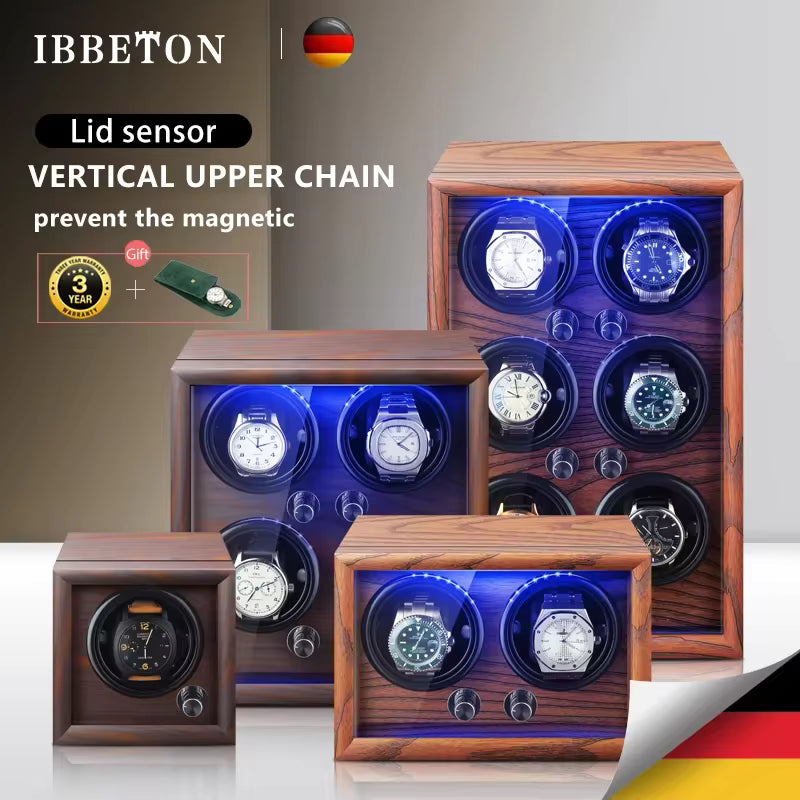
Given the specific requirements of extended storage, the features to prioritise in a watch box for this purpose are a close-fitting lid with a firm closure, quality velvet or microfibre interior lining rather than foam, individually cushioned slots appropriately sized for the pieces being stored, and construction in leather or wood that provides natural humidity buffering at the material level.
At Lux Watch Care, our watch storage box collection is built around quality construction and interior materials suited to extended storage periods. For a small collection being set aside for an extended period, our genuine leather 8-slot watch storage box provides eight individually cushioned positions in quality leather with a firm-fitting lid and soft interior lining. For larger collections requiring more capacity, our 8-10-12 slots vintage leather watch box covers a meaningful range of slot counts in a classic leather construction suited to both display and longer-term storage.
For automatic pieces being stored for extended periods where periodic manual winding will not be reliably maintained, combining box storage with a winder for those pieces is a practical arrangement. Our overview of how automatic watches benefit from a winder during periods of non-wear is a useful reference for collectors making this decision.

Periodic Check-Ins: The Underrated Part of Long-Term Storage
Even with the right box in the right environment, watches in long-term storage benefit from periodic check-ins. Once every two to three months is a reasonable interval for most collectors. Taking each piece out of the box, examining it for any signs of moisture condensation under the crystal or surface discolouration, winding and running automatic pieces, and wiping everything down before returning it to the box - this process takes perhaps twenty minutes for a small collection and provides early detection of any developing issues before they become significant.
It also provides the opportunity to verify that the silica gel packets are functioning, that the box environment is not showing signs of humidity intrusion such as musty smell or lining discolouration, and that the room conditions remain appropriate.
Our more detailed guide on how proper watch storage practices protect a collection over years rather than just weeks covers these periodic maintenance habits alongside the broader storage framework for collectors who want to think systematically about the long-term care of their pieces.
For collectors considering their first dedicated storage solution, or those upgrading a setup that has not kept pace with a growing collection, our piece on why quality storage matters as much as regular servicing provides the context for why these decisions are worth taking seriously.
If you have questions about which storage solution suits the specific pieces in your collection and your storage environment, the Lux Watch Care team is happy to help.
Get in touch with us and we will help you find the right setup for your situation.
Frequently Asked Questions
Is a watch box good enough for long-term storage of luxury watches?
A quality watch box with a close-fitting lid, individually cushioned compartments, and velvet or microfibre lining is suitable for long-term storage when placed in a stable, climate-controlled environment. Standard boxes are not airtight, so the room conditions - temperature, humidity, and light exposure - are equally important to the box itself. For the most valuable pieces, combining a quality box with appropriate room conditions, silica gel for humidity management, and periodic check-ins provides the most reliable long-term protection.
What happens to an automatic watch stored for a long time without being worn?
An automatic watch stored without being wound will run down and stop, which is normal. The longer-term concern is that lubricating oils inside the movement may settle and lose their even distribution across contact points. To address this, periodic winding and running every two to three months is recommended for automatic watches in long-term storage. A watch winder can automate this function for pieces that will not be accessed regularly.
Should I remove the battery from a quartz watch before long-term storage?
Yes. A battery left inside a quartz watch during long-term storage can leak as it depletes, causing damage to the movement and dial that is often irreversible. Removing the battery before extended storage eliminates this risk. The watch will need a new battery and time-setting when it comes out of storage, but that is a straightforward and inexpensive process compared to movement damage from battery leakage.
Is foam cushioning in a watch box safe for long-term storage?
Some lower-quality foam materials can off-gas over time, releasing compounds that may react with rubber straps, synthetic bezels, and certain case finishes over extended storage periods. Quality velvet or microfibre lining does not carry the same risk and is a more appropriate choice for pieces stored for months or years. When selecting a watch box for long-term storage, the lining material quality is a more significant consideration than it would be for a box used in daily rotation.
What conditions should a watch box be kept in for long-term storage?
A stable temperature of roughly 15 to 20 degrees Celsius and relative humidity of around 40 to 50 percent are the conditions generally recommended for watch storage. Practically, this means a climate-controlled interior room away from windows, bathrooms, kitchens, and exterior walls. In more humid environments, silica gel packets placed inside the box help buffer humidity fluctuations and should be checked and refreshed periodically.
Should I have my watch serviced before putting it into long-term storage?
For watches approaching their service interval or that have not been serviced in five to seven years or more, having a professional service done before long-term storage is a worthwhile step. A watch entering storage with well-maintained lubricants and freshly inspected gaskets is substantially better positioned than one with aged oils. The gaskets in particular can stiffen and degrade over extended static periods, and having them inspected before storage allows any compromised seals to be replaced while it is straightforward to do so.
How often should I check on watches in long-term storage?
A check-in every two to three months is a practical interval for most collections. This involves removing each piece, examining it for condensation under the crystal or surface discolouration, winding and running automatic pieces, and wiping down the cases and crystals before returning them to the box. This interval provides early detection of any developing issues - humidity intrusion, battery leakage in quartz pieces, or signs of environmental damage - before they become more significant problems.