
Key Takeaways:
- CW (clockwise) rotation winds watches with mechanisms that require clockwise movement
- CCW (counter-clockwise) settings suit watches needing anti-clockwise winding
- Bi-directional mode works with watches that wind in both directions
- Most modern automatic watches use bi-directional winding mechanisms
- Incorrect rotation settings won't damage your watch but may fail to keep it wound
- TPD (turns per day) works alongside rotation direction for optimal winding
- Consult manufacturer specifications to determine your watch's ideal rotation setting
If you've recently purchased a watch winder or you're considering investing in one, you've probably encountered the terms CW, CCW, and bi-directional in the settings options. These abbreviations refer to rotation direction, and understanding them is essential for keeping your automatic watches properly wound without unnecessary wear.
At Lux Watch Care, we've helped countless Australian watch enthusiasts navigate the technical aspects of watch winding. Whilst watch winders might seem straightforward - put your watch in, switch it on, and walk away - the reality involves a bit more nuance. Getting the rotation direction right ensures your timepiece receives the movement it needs whilst avoiding excessive winding cycles that serve no purpose.
This guide explains what these rotation settings actually mean, which watches require which settings, and how to determine the correct option for your specific timepiece. Let's demystify the technical jargon and help you make informed decisions about your watch care routine.
Understanding Automatic Watch Movements
Before we dive into rotation settings, it helps to understand how automatic watches actually wind themselves through normal wear.
Automatic watches contain a rotor - a semi-circular weight mounted on a pivot that spins freely inside the watch case. As you move your wrist throughout the day, gravity and motion cause this rotor to rotate. This rotation transfers energy through a series of gears to wind the mainspring, which stores the power that keeps your watch running.
The clever bit is how different movements handle this rotor rotation. Some watches are designed to capture energy only when the rotor turns in one specific direction. Others can capture energy from rotation in both directions. This fundamental difference is why watch winder rotation settings matter.
When you're not wearing your watch, it has no wrist movement to keep the rotor spinning. Without that motion, the mainspring gradually unwinds, and eventually your watch stops. A watch winder simulates the motion your wrist would normally provide, keeping the rotor moving and the mainspring wound.

What CW (Clockwise) Rotation Means
CW stands for clockwise rotation - the same direction clock hands move around a dial. When you look at your watch winder from the front, CW rotation moves the watch in a circle to the right.
Some automatic movements are designed with unidirectional winding mechanisms that only engage when the rotor spins clockwise. In these watches, anti-clockwise rotation of the rotor simply spins freely without engaging the winding mechanism. It's not harmful - the rotor is designed to spin both ways - but it doesn't contribute any energy to the mainspring.
If your watch has a clockwise-only winding mechanism, setting your winder to CW ensures every rotation contributes to keeping your watch wound. Setting it to any other direction would mean the winder is moving your watch without actually winding it, which defeats the entire purpose of owning a winder.
Clockwise-only mechanisms were more common in vintage automatic watches, though some contemporary movements still use this design. Certain ETA movements and some vintage Rolex calibres fall into this category, though modern Rolex movements have moved to bi-directional winding.
Understanding CCW (Counter-Clockwise) Settings
CCW refers to counter-clockwise or anti-clockwise rotation - the opposite direction to clock hands. When viewing your winder from the front, CCW rotation moves the watch in a circle to the left.
Just as some movements only wind clockwise, others are designed with mechanisms that engage exclusively during counter-clockwise rotation. These watches ignore clockwise rotor movement, capturing energy only when the rotor spins anti-clockwise.
Counter-clockwise-only winding mechanisms are relatively uncommon compared to clockwise or bi-directional systems. However, they do exist in certain calibres, particularly some older automatic movements and specific brands that developed proprietary winding systems.
If you own a watch with a CCW-only mechanism and set your winder to clockwise rotation, you'll find your watch gradually stops despite being in the winder. The mechanism simply isn't engaging with the movement being provided. Switching to CCW rotation solves this immediately.
Bi-Directional Rotation Explained
Bi-directional rotation is exactly what it sounds like - the watch winder alternates between clockwise and counter-clockwise rotation cycles. Most quality watch winders offering bi-directional settings will rotate in one direction for a set period, pause briefly, then rotate in the opposite direction.
This setting exists because most modern automatic movements feature bi-directional winding mechanisms. These clever designs can capture energy from rotor movement in both directions, making them more efficient at staying wound during normal wear. Brands like Omega, many current Rolex movements, Breitling, and numerous others use bi-directional winding systems.
For watches with bi-directional mechanisms, you technically could use CW-only or CCW-only settings - the watch would wind perfectly fine rotating in just one direction. However, bi-directional rotation more closely mimics the random, multi-directional movement your watch experiences on your wrist during normal wear.
Some watch enthusiasts and technicians believe bi-directional winding helps distribute lubricants more evenly throughout the movement and prevents the rotor from developing wear patterns from constant single-direction rotation. Whether this makes a measurable difference is debatable, but it certainly doesn't hurt, and it more accurately replicates natural wearing conditions.
How to Determine Your Watch's Winding Direction
Identifying which rotation setting your specific watch requires involves several approaches, some more straightforward than others.
Manufacturer Documentation: The most reliable source is your watch's documentation or the manufacturer's website. Many brands specify winding direction in technical specifications, user manuals, or collector resources. This is always your first port of call when determining the correct setting.
Movement Research: If you know which movement your watch contains (often visible through exhibition casebacks or listed in documentation), research that specific calibre. Watch forums, movement databases, and horological references catalogue winding mechanisms for most common calibres.
Professional Consultation: Authorised dealers, watchmakers, and experienced collectors familiar with your brand can often identify winding requirements immediately. If you're uncertain, consulting someone knowledgeable prevents guesswork.
Observation Method: Here's a practical approach if documentation isn't available. Manually wind your watch fully (if it has a crown-winding option) or wear it for a full day to ensure it's completely wound. Then observe the power reserve indicator if your watch has one, or simply note the time.
Place the watch in your winder set to clockwise rotation for 24 hours. Check if the power reserve has maintained or if the watch is still running and accurate. Then repeat the process with counter-clockwise rotation. Whichever direction keeps the watch wound is at minimum compatible with your watch's mechanism. If both directions work, your watch has bi-directional winding.
This method takes several days but provides definitive, watch-specific answers without relying on potentially incomplete online information.
TPD and Rotation Direction: How They Work Together
Rotation direction (CW, CCW, or bi-directional) is only part of the winding equation. TPD - turns per day - is equally important and works alongside rotation settings to provide optimal winding.
TPD refers to how many complete 360-degree rotations the winder performs in a 24-hour period. Different watches require different TPD values depending on their power reserve capacity, the efficiency of their winding mechanisms, and how much energy each rotation transfers to the mainspring.
The relationship between TPD and rotation direction is straightforward: if your watch needs 650 TPD and you set your winder to bi-directional mode, the winder performs 650 complete rotations split between clockwise and counter-clockwise movements. If you set it to CW-only, all 650 rotations occur in one direction.
For watches with unidirectional winding (CW-only or CCW-only mechanisms), you typically need fewer TPD than the same watch would require in bi-directional mode. Why? Because every rotation contributes to winding rather than half the rotations being effectively "wasted" on the non-engaging direction.
Understanding how watch winder settings interact with your watch's specifications ensures you're providing adequate winding without excessive rotation that serves no purpose beyond unnecessary wear on the winder motor.
Common Watch Brands and Their Rotation Requirements
Whilst individual models vary and you should always verify specifications for your specific watch, here are general guidelines for popular brands:
Rolex: Modern Rolex movements (calibres 3130, 3135, 3235, and newer) use bi-directional winding. Vintage Rolex movements vary - some older calibres wind in one direction only, typically clockwise. The transition happened gradually through different calibre updates.
Omega: Most contemporary Omega movements feature bi-directional winding, including the co-axial calibres that define modern Omega watchmaking.
TAG Heuer: Generally bi-directional across their automatic range, though vintage pieces may vary.
Breitling: Modern Breitling movements predominantly use bi-directional winding systems.
Seiko: The vast majority of Seiko automatic movements wind bi-directionally, from affordable models through Grand Seiko.
Tudor: As Tudor shares movement technology with Rolex (and uses some Rolex calibres directly), modern Tudor watches typically feature bi-directional winding.
Panerai: Most Panerai automatic movements wind bi-directionally, though they use various base calibres from different suppliers, so verification is worthwhile.
IWC: Contemporary IWC automatic calibres generally employ bi-directional winding mechanisms.
This list provides starting points only. Movement variations, special editions, and vintage models frequently differ from general brand patterns. Always verify your specific watch's requirements rather than assuming based on brand alone.
Setting Up Your Watch Winder Correctly
Once you've determined your watch's rotation requirements, proper setup ensures effective winding without issues.
Initial Configuration: Start conservative. If your watch winds bi-directionally, begin with bi-directional settings and moderate TPD (around 650-800 turns). You can always adjust upward if needed, but starting high risks over-winding complications.
Observation Period: After setting up your winder, monitor your watch for several days. Is it maintaining accurate time? Does it wind and run consistently? If you have a power reserve indicator, is it maintaining good reserve levels?
Adjustment: If your watch isn't maintaining adequate winding, increase TPD gradually (in increments of 100-200 turns) rather than dramatically. If changing TPD doesn't help, reconsider rotation direction - you may have misidentified your watch's winding mechanism.
Documentation: Once you've identified settings that work perfectly for each watch in your collection, document them. When you rotate which watches occupy your winder, you'll have instant reference for correct settings rather than rediscovering them each time.
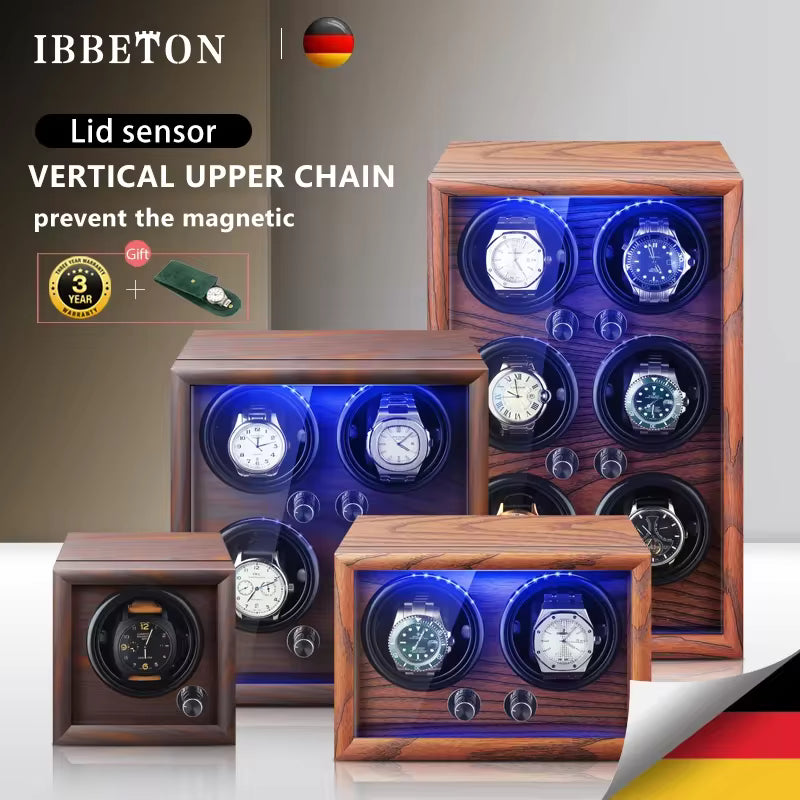
Quality watch winders like those in our watch winder collection offer programmable settings that remember your preferences, simplifying the setup process for watches you wind regularly.
Can Wrong Rotation Settings Damage Your Watch?
This is a common concern, and fortunately, the answer is reassuring: incorrect rotation direction won't damage your automatic watch.
If you set a clockwise-winding watch to counter-clockwise rotation, the rotor simply spins freely without engaging the winding mechanism. It's the mechanical equivalent of the watch sitting stationary - no winding occurs, but no harm results either. The watch will eventually stop once its existing power reserve depletes, but that's the extent of the consequence.
Similarly, setting a bi-directional watch to CW-only or CCW-only rotation doesn't cause problems. The watch winds perfectly fine in a single direction; it simply doesn't capture energy from the other direction's movement. This is functionally identical to how the watch would wind if you happened to move your wrist predominantly in one direction during normal wear.
The real risk isn't wrong rotation direction - it's excessive TPD that keeps winding a watch long after its mainspring is fully wound. Automatic watches include slip mechanisms that prevent over-winding damage, but unnecessarily high TPD does create wear on these slip mechanisms and on the winder motor itself.
This is why understanding proper setup procedures for optimal performance matters more than obsessing over perfect rotation settings. Getting TPD right, combined with appropriate rotation direction, keeps your watches properly wound without excessive wear on any components.
Special Considerations for Vintage Watches
Vintage automatic watches deserve special mention because they often have different winding requirements than contemporary timepieces.
Many vintage movements used simpler, unidirectional winding mechanisms. This made manufacturing easier and reduced complexity in an era when machining tolerances and materials weren't as advanced as modern standards. If you collect vintage pieces, determining correct rotation direction becomes more critical because bi-directional settings waste half their rotation cycles on these watches.
Vintage movements also typically require lower TPD than modern watches. Their winding mechanisms were often less efficient, but they also had smaller power reserves. A vintage watch might run perfectly on 500-600 TPD where a modern equivalent needs 800-1000.
Additionally, vintage watches may have aged lubricants, worn components, or mechanisms that haven't been serviced recently. Excessive winding can accelerate wear on these already-vulnerable movements. Understanding proper storage approaches for vintage timepieces includes being particularly conservative with winder settings until you've confirmed what your specific watch needs.
Watch Winder Features That Simplify Rotation Settings
Modern watch winders have evolved significantly, offering features that make managing rotation settings considerably easier.
Programmable Memory: Quality winders store multiple setting profiles, letting you save specific TPD and rotation combinations for different watches. When you swap watches in the winder, simply select the appropriate profile rather than manually reconfiguring everything.
Adjustable Rotation Cycles: Rather than continuous rotation, better winders use interval-based programmes - rotate for a set period, rest, rotate again. This more closely mimics natural wearing patterns and prevents unnecessarily constant motor operation.
Direction Flexibility: Look for winders offering all three options (CW, CCW, and bi-directional) rather than limited choices. This ensures compatibility with any watch you might add to your collection, including vintage pieces with unidirectional mechanisms.
Silent Operation: Whilst not directly related to rotation settings, motor noise that varies by model and placement matter when winders run in bedrooms or offices. Effective quiet operation lets you maintain proper winding schedules without noise disturbance.
Display and Controls: Clear displays showing current rotation direction and TPD settings help you verify configurations at a glance. Intuitive controls make adjustments straightforward when experimenting with new watches.
When evaluating watch winders, consider how easy the rotation controls are to understand and adjust. A winder with perfect specifications but frustrating controls becomes annoying to use regularly, potentially leading to incorrect settings through user error rather than mechanical limitation.
Multi-Watch Winders and Rotation Direction
If you're using a winder that accommodates multiple watches simultaneously, rotation direction adds another layer of consideration.
Some multi-watch winders rotate all positions in unison - every watch gets the same TPD and rotation direction. This works perfectly if your entire collection uses the same winding mechanism type. However, if you own watches with different rotation requirements, unified settings create compromises.
Higher-end multi-watch winders offer independently controllable positions. Each watch location has its own motor and settings, letting you run one position on CW rotation at 650 TPD whilst another runs bi-directional at 800 TPD. This flexibility matters significantly for diverse collections.
Consider your collection's characteristics when choosing between unified and independent rotation controls. If you own three modern Omega watches with identical winding requirements, unified rotation works fine and costs less. If you collect across multiple brands and eras, including vintage pieces, independent controls justify their higher price through proper care for each watch.
Our watch box options complement winder use by providing proper storage for watches not currently being wound, ensuring your entire collection receives appropriate care whether actively wound or resting.
Troubleshooting Rotation Setting Issues
Sometimes your watch doesn't respond as expected to winder settings, even when you've supposedly configured everything correctly.
Watch Stops Despite Winding: First verify you've selected the correct rotation direction. Try switching to bi-directional mode regardless of what your research indicated - it's possible the information was wrong or you misidentified the movement. If bi-directional rotation solves the problem, you know the watch winds in the direction you weren't using.
If rotation direction isn't the issue, insufficient TPD is the likely culprit. Increase TPD by 200 turns and monitor for several days. Continue increasing until the watch maintains proper winding.
Watch Runs But Loses Accuracy: This often isn't a rotation setting issue - it suggests the watch needs servicing or regulation. However, if accuracy problems only occur when using the winder (and the watch keeps good time with daily wear), excessive TPD might be over-winding the mainspring. Reduce TPD and see if accuracy improves.
Winder Makes Unusual Noises: This typically indicates winder mechanical issues rather than rotation setting problems, but it's worth checking that your watch is properly secured in its holder. Loose watches can shift during rotation, causing unexpected sounds.
Understanding common winder problems and solutions helps you distinguish between settings issues and mechanical faults that require professional attention.
The Relationship Between Winding and Watch Longevity
A common question is whether keeping watches constantly wound through winder use affects their longevity compared to letting them stop between wearings.
The watch industry doesn't have universal consensus on this. Some argue that constant running means constant wear on the movement, potentially shortening service intervals. Others counter that stopping and starting creates more stress than consistent running, and that automatic movements are designed for continuous operation during normal wear.
What we can say definitively is that proper rotation settings and appropriate TPD matter more than whether you wind constantly or intermittently. A watch running on a correctly configured winder experiences less stress than one wound with excessive TPD or unnecessary rotation cycles.
If you wear a watch regularly - several times per week - there's little benefit to keeping it in a winder between wearings. The watch naturally winds through normal wear, and brief stops don't harm anything. Winders prove most valuable for watches you wear occasionally, where keeping them wound eliminates the need to reset time, date, and complications before each wearing.
For watches with complex perpetual calendars or other complications that are tedious to reset, winders become genuinely useful tools rather than optional accessories.
Making Informed Decisions About Your Watch Care
Understanding CW, CCW, and bi-directional rotation settings empowers you to use your watch winder effectively rather than relying on guesswork or trial-and-error.
The key points to remember: identify your watch's specific winding mechanism through manufacturer documentation or careful observation, start with conservative TPD settings combined with appropriate rotation direction, and monitor your watch's performance over several days before concluding you've found optimal settings.
Watch winding isn't mysterious or complicated once you understand these fundamentals. Rotation direction is simply about matching your winder's movement to your watch's mechanical requirements, ensuring the energy you're providing actually reaches the mainspring rather than spinning uselessly.
At Lux Watch Care, we're committed to helping Australian watch enthusiasts maintain their collections properly. Whether you're winding a single treasured timepiece or managing an extensive collection spanning different brands and eras, understanding these technical details ensures your watches receive the care they deserve.
For questions about rotation settings, TPD requirements, or which winder features matter most for your specific collection, contact our team. We're always happy to discuss the technical aspects of watch care and help you make informed decisions about protecting your investment.
Frequently Asked Questions
What does CW mean on a watch winder?
CW stands for clockwise rotation - the same direction clock hands move around a dial. When set to CW, the watch winder rotates your watch in circles to the right when viewing from the front. This setting is appropriate for automatic watches with clockwise-only winding mechanisms, where the rotor only engages and winds the mainspring when spinning in the clockwise direction.
Can I damage my watch by using the wrong rotation direction?
No, using incorrect rotation direction won't damage your automatic watch. If you set a clockwise-winding watch to counter-clockwise rotation, the rotor simply spins freely without engaging the winding mechanism. The watch will eventually stop once its power reserve depletes, but no mechanical harm occurs. The watch experiences the same effect as sitting stationary on a desk.
How do I know if my watch needs CW, CCW, or bi-directional winding?
Check your watch's documentation or manufacturer specifications first, as this is the most reliable source. If documentation isn't available, research the specific movement calibre in your watch using horological databases or forums. Alternatively, use the observation method: wind your watch fully, place it in the winder on CW-only for 24 hours, then check if it maintained winding. Repeat with CCW-only. If both directions work, your watch has bi-directional winding.
Do most modern automatic watches use bi-directional winding?
Yes, the majority of contemporary automatic watches from major brands feature bi-directional winding mechanisms. This includes current models from Rolex, Omega, Breitling, TAG Heuer, Seiko, and most other mainstream manufacturers. Bi-directional winding is more efficient at capturing energy during normal wear, making it the preferred design in modern horology. Unidirectional winding mechanisms are more common in vintage watches.
What's the difference between bi-directional rotation and bi-directional winding?
Bi-directional rotation refers to the watch winder alternating between clockwise and counter-clockwise rotation cycles. Bi-directional winding describes the watch movement's ability to wind the mainspring from rotor rotation in both directions. A watch with bi-directional winding can be wound on any rotation setting (CW, CCW, or bi-directional), whilst the winder's bi-directional rotation setting attempts to simulate natural wearing motion by rotating in both directions.
Should I use bi-directional settings even if my watch only winds in one direction?
No, if your watch has a unidirectional winding mechanism (CW-only or CCW-only), use the matching single-direction setting rather than bi-directional. Using bi-directional rotation on a unidirectional watch means half the rotation cycles don't engage the winding mechanism, effectively wasting half the winder's movement. Set the winder to match your watch's winding direction for optimal efficiency and reduced unnecessary motor operation.
How does TPD interact with rotation direction settings?
TPD (turns per day) specifies how many complete 360-degree rotations occur in 24 hours, working alongside rotation direction to provide complete winding specifications. If your watch needs 800 TPD on bi-directional settings, the winder performs 800 total rotations split between both directions. The same watch on CW-only settings might need only 650 TPD because every rotation contributes to winding rather than half being in the non-engaging direction. Both TPD and rotation direction must be configured appropriately for effective winding.